

Panels usually project light directionally from a set distance, while mats spread light across the body surface they touch or closely cover. That makes panels better for adjustable spot or front-facing treatment, and mats better for broad, low-hassle coverage over the area they physically reach.
If you have ever stood in front of a panel wondering whether you are too far away, or laid on a mat wondering whether the light is reaching evenly enough, the real issue is distribution, not just device size. Treatment results in photobiomodulation depend heavily on irradiance, dose, and delivery conditions, so choosing the right format can make a routine easier to repeat and easier to match to face care, recovery, or larger body-area use. This guide shows how panels and mats distribute light differently and how that changes what each one is actually good at.
What “light distribution” means in home red light therapy
Direction, distance, and coverage pattern
In home red light therapy, light distribution is the pattern a device creates across your skin at a given distance and angle. Photobiomodulation efficacy depends on light parameters, not just wavelength, so a device that looks powerful on paper may behave very differently once you step back a few inches or try to cover a curved body area.

A panel sends light outward in a directional beam. That usually creates a stronger center zone and a wider but less intense outer zone as distance increases. A mat works differently: instead of projecting from across the room, it places many emitters close to the treatment area, so the distribution is tied more to the mat’s physical footprint than to beam throw.
Why delivery method matters more than marketing claims
The practical problem is that two devices can advertise similar wavelengths while delivering very different treatment conditions. A new perspective on light therapy delivery and dose-focused photobiomodulation research both support the idea that how light is delivered, including proximity and dosing conditions, changes the biological effect.
For buyers, that means “more LEDs” or “higher irradiance” is not enough information. You need to know whether the device is designed to treat from several inches away, whether coverage stays even across the target area, and whether your routine depends on lying on the device, wrapping it, or standing in front of it.
How panels and mats distribute light differently
Panels: directional light with adjustable working distance
Panels are best understood as projected-light devices. You place the body in front of them, then adjust distance to trade intensity for coverage. Closer positioning usually concentrates more light into a smaller area; farther positioning usually covers more surface area, but the delivered intensity becomes less concentrated. Model-based estimates of effective dose at the target reinforce that tissue dose depends on delivery conditions, not just the device specification sheet.
That directional behavior is useful when you want flexibility. A panel can be aimed at the face, knees, shoulders, or back without the device touching the skin. It also works well when you want front-of-body exposure while seated or standing. The inconvenience is that setup discipline matters more. A small change in distance, angle, or posture can change how evenly the body area is being treated.

Mats: close-range surface coverage over the contact area
Mats distribute light across the sections of the body they physically contact or closely conform to. Instead of relying on throw distance, they rely on proximity and emitter spread. That tends to make the exposure pattern feel more predictable across the covered zone, especially for larger flat or semi-flat areas such as the back, hamstrings, calves, or torso.
The trade-off is simple: mats can feel more even across the area they touch, but they do not “project” well beyond their own footprint. If the treatment area is wider than the mat or wraps around a joint awkwardly, the uncovered sections will not benefit much from the same session unless you reposition.
Fast comparison table
Format |
How light is distributed |
What it does well |
Where it becomes inconvenient |
Who should consider it |
Setup constraints before purchase |
Panel |
Directional beam from a fixed distance |
Adjustable spot treatment, face care, front-body sessions, no skin contact needed |
Needs consistent distance and positioning; coverage can be less uniform on curved areas |
Users treating face, chest, knees, shoulders, or standing full-front sessions |
Needs floor or wall space, a stable stand or mount, and enough room to stand or sit at the intended distance |
Mat |
Close-range spread across the contact surface |
Broad body-area recovery, low-effort routines, repeatable placement |
Limited to the mat’s footprint; less flexible for targeted aiming |
Users treating back, legs, hips, or doing relaxed recovery sessions |
Needs a bed, floor, table, or couch surface large enough for the mat and body position |
Panel for large areas |
Wider projected coverage at a longer distance |
Faster treatment of a larger visible area |
Lower concentration per sq in as you move farther away |
Users who want one device for multiple body zones |
Requires more careful timing and body positioning |
Mat for localized areas |
Even exposure across one placed zone |
Easy repeat sessions for one body region |
Less efficient for face-only or odd-angle joint use |
Users focused on back, thighs, or post-workout body regions |
Repositioning may be needed for smaller or awkward targets |
Does a mat distribute light more evenly than a panel?
Usually yes across the exact area it touches
For the specific body area a mat covers, it often feels more even in real use because the emitter-to-skin distance changes less from one section to another. That matters because photobiomodulation dose-response findings show that dosing conditions influence outcomes, and inconsistent delivery can make routines harder to compare from session to session.
A panel can still be very effective, but its evenness depends more on geometry. If you treat a flat front-facing area at a fixed distance, distribution can be quite good. If you treat a curved area such as the shoulder cap, hip side, or one bent knee, parts of the body may sit closer to the panel than others, creating stronger and weaker zones within the same session.
But “more even” does not always mean “better”
Even distribution is only one part of device choice. For facial skincare or small-joint work, a panel can be more practical because you can direct the light exactly where you want it without lying down or draping a device over furniture. For broader post-workout recovery, a mat’s more stable surface coverage may be easier to live with day after day.
The better question is not “Which one is more even?” but “Even over what area, in what position, and with how much setup friction?” A mat wins on evenness within its footprint. A panel wins on directional flexibility and the ability to treat without body contact.
How distribution changes real-world routines
Face care and skincare routines
Panels are usually the easier fit for face-focused routines because they deliver frontal exposure without pressing LEDs against the skin. You can sit at a repeatable distance, keep the entire face in view, and use the same setup for the neck and upper chest. That makes panels especially practical for users who want one device for face care plus occasional spot treatment elsewhere.

A mat is less convenient for this use case unless it is specifically designed for facial positioning or flexible wrapping. Lying on a flat mat can create awkward angles for nose, jawline, and eye-area positioning, and it is harder to maintain a comfortable, repeatable setup for short skincare sessions.
Muscle recovery and larger body sections
For hamstrings, lower back, glutes, quads, or the full posterior chain, mats usually feel simpler. You lie down once, cover a broad area, and repeat the routine with minimal alignment work. Research on wound care and other photobiomodulation uses consistently points back to delivery conditions and dose quality, which is one reason broad, repeatable surface contact can be appealing for recovery routines.
Panels can still work well for recovery, especially if you want to treat the front of the thighs, one knee, or one shoulder after training. But once the target area becomes large or spans multiple contours, the time and positioning effort can increase.
Localized treatment versus full-body convenience
If your routine changes often, panels tend to be more versatile. One day you may use it for face care, the next day for a wrist, then for the front of the legs. If your routine is consistent and body-area based, mats tend to be more convenient. That is why many home users end up choosing based on habit, not just performance claims.
The dividing line is this: panels are better when you need aiming freedom; mats are better when you need repeatable spread across a known body area.
What setup constraints matter before you buy
Space, posture, and routine friction
A panel asks for dedicated space in front of the device. That may mean a bedroom corner, home gym wall, or a stable stand near a chair. You also need to consider posture: will you stand still, sit upright, or keep repositioning during the session? Small routine annoyances matter because they reduce long-term consistency.
A mat asks for horizontal or semi-reclined space instead. That is usually easier for users who already do recovery work on a bed, couch, massage table, or floor mat. The trade-off is storage and footprint. A large mat can be easier during use but less elegant to store between sessions.
Decision table: which format fits your routine?
If your priority is... |
Panel is usually the better fit |
Mat is usually the better fit |
Why |
Facial skincare |
Yes |
Sometimes |
Panels are easier to position in front of the face and neck |
Broad back or leg recovery |
Sometimes |
Yes |
Mats cover larger contact areas with less repositioning |
Quick spot treatment on changing body parts |
Yes |
Sometimes |
Panels are easier to aim at different targets |
Relaxed, low-effort sessions |
Sometimes |
Yes |
Mats reduce distance and alignment variables |
Small apartment storage |
Sometimes |
Sometimes |
Compact panels store vertically; mats fold or roll depending on design |
Treating curved or awkward body areas |
Yes, with careful aiming |
Sometimes |
Panels can be angled; mats are limited by physical contact shape |
Full-body front-and-back convenience |
Limited without repositioning |
Limited without a large mat or multiple positions |
Both formats usually require some compromise unless the device is large |
How to compare specs without getting misled
Irradiance claims are only meaningful with distance
A device’s output number matters only if you know where it was measured. Reviews of photobiomodulation parameters and target-dose modeling work both point to the same buyer lesson: dose and effect depend on actual delivery conditions, including distance from the source.

For a panel, this is critical. An irradiance claim measured very close to the LEDs may not reflect the experience at a realistic standing or seated treatment distance. For a mat, the number may better represent real use if the device is intended to rest directly against or very near the body, but you still need to know whether the reading reflects contact use, a cover layer, or a gap.
Beam angle and body geometry change the session
Panels also vary by beam spread. A tighter beam tends to hold more intensity in a smaller area, while a wider beam spreads light more broadly. On the body, that means two users can get different treatment patterns from the same panel depending on height, posture, and whether the target area is flat or curved.
Mats reduce some of those geometric variables, but not all of them. Compression, body weight, soft padding, and whether the mat lies flat can still influence how evenly the light reaches different sections. The practical takeaway is to compare formats using real-use conditions, not brochure language alone.
FAQ
Q: Does a red light therapy mat distribute light more evenly than a panel? A: Usually yes within the exact area the mat touches or closely covers. A panel can still deliver effective treatment, but its distribution changes more with distance, angle, and body contour.
Q: Does standing farther from a panel reduce intensity? A: In practical use, yes. Moving farther away usually increases the coverage area while reducing how concentrated the light is on a given section of skin, which is why treatment distance should stay consistent from session to session.
Q: Which is better for home use: a panel or a mat? A: It depends on the routine. Panels are usually better for face care, changing target areas, and front-facing sessions. Mats are usually better for broad back, hip, leg, or recovery-focused routines where repeatable placement matters more than aiming flexibility.
Practical Next Steps
If you are choosing between the two, start with the body area and routine you will actually repeat, not the biggest output claim. A panel is the practical choice when you want adjustable, directional treatment from a short distance. A mat is the practical choice when you want broad, low-fuss coverage across the body area it can physically reach.
- List the one or two body areas you expect to treat most often.
- Decide whether you want to sit or stand in front of a device, or lie down on it.
- Check whether the target area is small and directional or broad and surface-based.
- Compare irradiance claims only when the testing distance is clearly stated.
- Measure your available setup space before buying, especially for panel stand distance or mat layout.
- Choose the format that makes repeat sessions easiest, because consistency matters more than feature count alone.


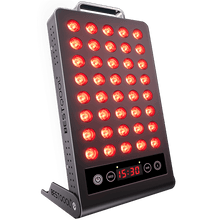
 Small
Small
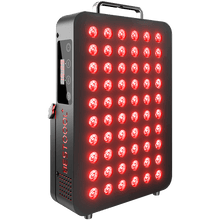
 Moderate
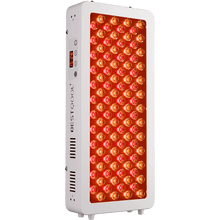
 Moderate

 Moderate
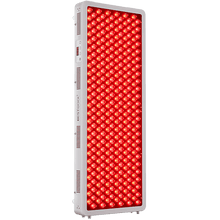
 Full
Full

