

Yes, you can use red light therapy while reading or watching TV in bed, but it works best when the device is positioned safely, your eyes are protected, and the session stays short and intentional.
Trying to wind down with a book in one hand, a red light panel glowing nearby, and your favorite show on low volume can feel practical until you wonder whether you are helping recovery or exposing your eyes to too much light before sleep. In real-world home routines, the usable window is usually brief: about 10-20 minutes, a few nights per week, with the device kept at the distance the manufacturer specifies. Here is how to make bedtime red light therapy comfortable, consistent, and less likely to interfere with sleep.
The Short Answer: It Depends on the Setup

Red light therapy, also called photobiomodulation, uses red and near-infrared light to support cellular activity, often through effects on mitochondria and energy production. The evidence is still developing, but major health references describe it as generally low risk when used correctly, while also noting that long-term safety and ideal dosing are not fully settled; short-term red light therapy appears safer when people follow device instructions and protect their eyes.
Using it in bed is not automatically a problem. The main concerns are practical: whether the light is reaching bare skin, whether you are too close to a bright panel, whether you are staring toward LEDs, and whether the TV or tablet is undermining your wind-down routine. A 10-minute knee session with a wrap while reading is very different from lying inches from a high-output panel while watching a bright screen for an hour.
Reading in Bed Is Usually the Better Pairing

Reading pairs well with red light therapy because it keeps the session calm and easy to time. If you are treating legs, hips, shoulders, or low back with a panel or flexible pad, you can read while the device runs, then stop when the timer ends. The key is to make the therapy the anchor of the routine, not something that accidentally stretches from 15 minutes into 45.
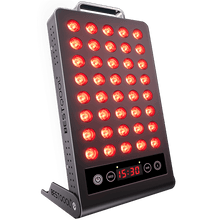
For example, if your panel protocol says 10 minutes at 12 inches, set it at that distance, expose the treatment area, start the timer, and read one short chapter. When the session ends, turn the device off even if you keep reading. This matters because red light therapy does not follow a “more is always better” pattern; product-selection guidance emphasizes wavelength, irradiance, duration, and distance because dosing variables strongly affect how a device should be used.
Watching TV Is Possible, but Sleep Timing Matters

Watching TV during red light therapy is more complicated because the red light device is not the only light source in the room. A dim, distant TV may be fine for some people, especially earlier in the evening. A bright TV, tablet, or cell phone close to your face can keep your brain more alert, which may work against the relaxing effect you were hoping to build.
If your main goal is recovery after training, joint comfort, or skin consistency, TV is not a dealbreaker. If your goal is better sleep, keep the screen dim, use warmer display settings, and finish the red light session before your final lights-out routine. Clinical guidance notes that photobiomodulation is not a one-time treatment and that optimal frequency and duration are still being studied, so the smarter strategy is a repeatable routine rather than an intense late-night session; consistent use matters more than multitasking.
Eye Safety Comes First
The biggest bedtime mistake is treating “red” as automatically gentle for the eyes. Red and near-infrared therapy does not use ultraviolet light, but high-output LEDs can still be uncomfortably bright, and near-infrared light may be partly invisible. That means you may not realize how much light is aimed toward your eyes.
When treating the face, upper chest, neck, or shoulders in bed, use the eye protection that came with the device, keep your eyes closed if instructed, and avoid looking directly at LEDs. At-home mask guidance also puts eye protection near the top of the safety list, especially because device quality and shielding vary; adequate eye protection is part of choosing a responsible device.
Distance, Duration, and Skin Exposure Matter More Than the Activity
Whether you are reading or watching TV, the therapy only makes sense if the setup matches the device. Clothes, heavy blankets, makeup with SPF, and thick lotions can reduce the amount of light that reaches the target area. If you are treating sore quads after a workout, the panel needs a clear path to the skin, not a comforter between you and the LEDs.
Most home panel routines in research notes fall into a practical range of 10-20 minutes, often at about 6-12 inches for deeper tissue goals or farther away for some skin-focused use, depending on the device. Device-selection guidance warns that session length and placement are tied to irradiance, so manufacturer protocols should guide the routine rather than guesswork.
Bedtime situation |
Better choice |
Why it matters |
Reading a paperback during a knee session |
Usually reasonable |
Easy to keep eyes away from the LEDs and stop on time |
Watching a dim TV during a back session |
Often acceptable |
The screen is not in the treatment path, but sleep sensitivity varies |
Scrolling a bright cell phone during facial therapy |
Poor fit |
More eye exposure, more alerting light, and more distraction |
Wearing a face mask device while reading |
Device dependent |
Eye shielding and fit matter more than the activity |
Falling asleep with a panel on |
Avoid |
Overuse, heat, eye exposure, and missed timing become more likely |
Best Bed Setups by Goal

For muscle recovery or joint comfort, a flexible pad, wrap, or small panel is often easier in bed than a large vertical panel. Place it so the target area is exposed, use the recommended distance or direct-contact instructions, and stop when the timer ends. Localized devices are especially practical for knees, ankles, elbows, shoulders, and low back because they do not require lighting your whole bedroom.
For skin care, a mask or tabletop device is usually more precise than trying to angle a full panel from a pillow. The best-supported consumer guidance tends to favor devices that disclose wavelengths, have FDA clearance where applicable, and provide clear treatment parameters over marketing claims alone.
For sleep support, keep the routine quiet and earlier in the wind-down window. A practical example would be a 10-minute chest, neck, or leg session about 30-60 minutes before sleep, followed by reading under a low, warm lamp. If you notice you feel more alert after using a bright panel near your face, move the session earlier or treat a body area farther from your eyes.
Pros and Cons of Bedtime Red Light Therapy
The upside is consistency. A device you can use while reading for 10 minutes is more likely to become a habit than one that requires a perfect spa-like setup. Bedtime use can also pair well with stretching, breathwork, or a simple recovery routine after a long day.
The downside is sloppy dosing. Bed is where people fall asleep, lose track of time, pull blankets over treatment areas, or place devices too close because they are trying to get comfortable. Medical guidance also cautions that misuse, overuse, or lack of eye protection may create skin or eye risk, even though at-home devices are generally considered safer when used as directed.
Practical Rules for a Safe Bedtime Routine

Keep the session short, timed, and matched to one goal. If tonight’s goal is sore calves, treat the calves. If the goal is facial skin care, use the mask or device as instructed and skip direct screen viewing during the session. Mixing face, knees, back, and chest in one bedtime session can turn a simple habit into too much exposure and too little clarity.
Use reading as the default activity when sleep is the priority. If you watch TV, dim the screen, sit so you are not facing the LEDs, and end the therapy before you are drowsy enough to forget the device is on. Red light therapy is a recovery tool, not background lighting for the whole evening.
When to Avoid Bedtime Use

Avoid using red light therapy in bed if you cannot stay awake long enough to turn it off, if the device feels hot or irritating, if you are tempted to stare toward the lights, or if late sessions make you feel wired. It is also sensible to check with a qualified clinician before use if you have eye disease, a history of skin cancer, active skin problems in the treatment area, pregnancy-related questions, or medications that increase light sensitivity.
A simple, well-run bedtime session should feel boring in the best way: clean skin, correct distance, protected eyes, timer on, device off when finished. Reading fits that rhythm well. TV can fit too, but only when it stays dim, brief, and secondary to the recovery routine.


 Small
Small

 Moderate

 Moderate

 Moderate

 Full
Full

