

If a bedtime red light session leaves you feeling more awake than sleepy, move it earlier, shorten it, and reduce light exposure to your eyes. Red light is not automatically sleep-neutral, and some people tolerate it better in the late afternoon or early evening than right before bed.
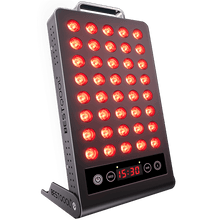
Are you lying there after a “relaxing” bedside session with your eyes wide open and your mind oddly busy? A controlled trial found that an hour of red light before bed made people feel less sleepy afterward, which matches what many home users notice when the dose or timing is off. You can usually fix this by changing when you use the device, how long you use it, and where you aim it.
Why red light can make you feel too awake at night
Red light therapy is often described as gentler than blue or bright white light, and that is broadly reasonable. Red and near-infrared light are commonly used for skin support, soreness, and recovery because they may affect mitochondria, circulation, and inflammation, as summarized in skin support and recovery and LED light therapy for skin conditions. But gentler does not mean calming before sleep.
The clearest warning comes from a randomized trial on red light before bed. In that study, an hour of red light before bedtime made both healthy adults and people with insomnia feel less sleepy, and it increased negative emotion. In the insomnia group, anxiety also rose. Some sleep measures improved compared with white light, but compared with darkness, several outcomes were worse. The practical takeaway is simple: if your goal is falling asleep easily, do not assume bedside red light is harmless just because it is red.
That does not mean every evening session is a bad idea. Consumer and clinical sources often note that the timing of light exposure changes its effects, and morning bright light is one reason light can strongly influence alertness and circadian rhythms. The same broad principle applies here: your body may read the session as a cue for activation, especially if the treatment is long, bright, close to your face, or too near bedtime.
What to do tonight if you already feel too alert
When this happens, the first move is to stop chasing sleep with more light. Turn the device off, dim the room, and return to a low-light wind-down routine. That means no extra lamp exposure, no cell phone scrolling, and no second session “just to relax.”
If your session was facial or upper-body, increase the distance and reduce future duration. A light therapy safety advice notes that overstimulation can happen, and one practical fix is cutting sessions to 15 minutes. The same source recommends moving farther from the light if you also notice eye strain or a headache.
A simple rule helps: if you feel more mentally alert within 10 to 30 minutes after treatment, treat that as a real response, not a fluke. Your body is telling you that this timing is wrong for you.
If your session did this |
Most useful adjustment |
You felt wired, restless, or mentally “on” |
Move the next session to at least 2 hours before bed |
You had eye strain or a mild headache |
Increase distance and avoid direct facial exposure |
You felt calm but not sleepy |
Keep the session earlier and shorter rather than later and longer |
You were treating sore muscles, not sleep |
Aim at the body, not the face, and keep the bedroom dark afterward |
The fastest way to fix the pattern going forward

Move the session earlier
For most people, this is the highest-yield change. Atria’s practical advice notes that if red light feels energizing, it should be used at least 2 hours before bedtime. That is a good starting point, not a hard limit. If you are sensitive, moving it to late afternoon or right after dinner is often better than forcing it into the last hour of the night.
A real-world example helps. If you currently use a bedside panel at 10:15 PM and want lights out at 10:45 PM, that window is likely too tight if you are prone to stimulation. Shift the session to 7:30 PM or 8:00 PM for a week and compare how long it takes you to fall asleep.
Shorten the session
Longer is not automatically better with photobiomodulation. Dose-response guidance suggests a biphasic pattern, meaning too little may do nothing, but too much can reduce the benefit. For many at-home devices, 5 to 20 minutes per area is a common practical range. If you get too alert at night, start at the low end.
A good test is 8 to 10 minutes instead of 20 to 30 minutes, especially if the panel is close. If that still leaves you too awake, reduce the duration again before deciding red light is a poor fit for you.
Keep it out of your eyes
The effect of therapeutic light is not just about skin or muscle. Light that reaches the eyes can affect alertness and body-clock signaling. Bright-light treatment research repeatedly shows that timing and ocular exposure matter, even when you are not staring directly into the device. If your goal is recovery rather than facial skin treatment, there is little reason to sit in bed with a panel lighting up your face and bedroom.
That is why many people do better aiming the device at their legs, hips, lower back, or shoulders earlier in the evening, then keeping the sleep environment dark afterward.
Why one source says “relaxing” and another says “alerting”
Some wellness sources suggest evening red light may feel calming or support sleep, while the controlled trial above found increased alertness and more negative emotion after a full hour of red light before bed. Those conclusions are not necessarily contradictory.
The most likely reasons are dose, timing, and device setup. A short 10-minute body session at a moderate dose is very different from a full hour of light before bed. Red-only exposure may also behave differently from mixed red and near-infrared devices, and face exposure can feel different from treating a sore knee or lower back. People also vary widely. Some feel pleasantly heavy and relaxed after a session, while others feel mentally sharper. If you are in the second group, the useful response is not to debate the internet. It is to adjust the protocol.
A better bedtime protocol for recovery-focused users
If you use red light for muscle soreness, skin support, or general recovery, keep the treatment tied to those goals instead of trying to turn it into a sleep aid. Use clean, bare skin when relevant, follow the device’s distance chart, and stay within the maker’s recommended session range. Cleveland Clinic and Atria both emphasize regular treatment and realistic expectations rather than marathon sessions.
A practical schedule is simple: place the session in late afternoon or early evening, keep it around 10 minutes at first, avoid direct eye exposure, and spend the last hour before bed in ordinary dim household light instead of treatment light. Track three things for one week: how alert you feel after the session, how long it takes you to fall asleep, and whether you wake during the night. That small journal will tell you more than marketing claims.
When to stop experimenting and get medical advice
Light therapy is generally considered relatively safe, but it is not for everyone. St. Kate’s source flags overstimulation as a real side effect, and Cleveland Clinic notes extra caution for people taking photosensitizing medications, those with inherited eye disease, or those with a history of certain eye problems. People with bipolar disorder also deserve special care because light exposure can trigger mood shifts in susceptible patients, and general light therapy sources recommend clinician input.
If your bedtime session repeatedly causes racing thoughts, marked anxiety, headaches, or a clear worsening of insomnia, stop using it near bedtime. If sleep disruption continues after you move the session earlier and shorten it, that is a sign to stop self-experimenting and discuss the pattern with a clinician.
The goal is not to force red light into a sleep routine that does not suit you. If it helps your skin, pain, or recovery, use it when your body tolerates it best, and let darkness do the bedtime work.


 Small
Small

 Moderate

 Moderate

 Moderate

 Full
Full

