

Keep sweat off the housing, prevent condensation, and store the device where airflow can dry it fully. In most home gyms, smart placement and a quick post-session wipe-down do more to protect a red light therapy device than any accessory.
Using a red light therapy device right after a hard ride, row, or treadmill session while the room still feels sticky is exactly when moisture problems tend to start. Sweat, warm air, and cooler electronics create a predictable path to residue buildup, charging issues, and corrosion over time. The good news is that a simple setup, cleaning routine, and storage plan can protect the device without making your recovery routine harder.
Red light therapy devices are often marketed for convenience, but that same convenience creates a maintenance problem in a home gym. The environment that helps you sweat also exposes electronics to salt, humidity, and fast temperature changes. In practice, the damage is rarely dramatic on day one. What usually appears first is a hazy lens, a dusty fan, an unreliable charger, or LEDs that seem weaker than they used to.
Why moisture is such a problem for red light devices
Small-electronics corrosion from moisture can happen even when moisture arrives as sweat vapor or condensation rather than a direct splash. That matters for red light therapy panels, masks, and handhelds because they rely on stable power delivery, clean LED surfaces, and, in many cases, open vents for cooling. Once sweat mist settles on the housing, it leaves behind salts and skin residue. Once humid air gets into seams, ports, or fan openings, that moisture can linger long after the workout ends.
Condensation starts when warm, moist air hits a cooler surface, which is why a device can get damp without ever being sprayed. A common home-gym example is finishing a workout, turning on the panel immediately, and placing it near an exterior wall or under an air-conditioning vent. The room is warm, your body is releasing moisture, and the device surface may still be cool. That is enough to create a thin film of moisture inside or around openings.
Power, distance, and exposure time affect red light therapy dose, so anything that blocks light or interferes with cooling can reduce consistency. A dirty lens or dusty vent does not just look messy. It can lower output consistency, increase heat stress, and make a carefully planned 10- to 20-minute session less predictable.
The best placement in a home gym
The safest rule is simple: do not treat your red light device like gym equipment. A spin bike can live in the sweat zone. A red light panel should sit just outside it.
If your device is within arm’s reach of a treadmill, rowing machine, heavy bag, or power rack where you regularly drip sweat, move it. Even shifting it 3 to 6 ft away from the main sweat path can reduce direct mist, accidental hand contact, and floor splash from bottles or towels. In smaller rooms, a better compromise is to keep the panel in the same room but angle it away from the cardio station and use it only after the room has aired out for a few minutes.
A separate recovery corner has a clear advantage and one tradeoff. The benefit is lower moisture exposure, less dust from rubber flooring and chalk, and fewer accidental bumps. The tradeoff is losing the convenience of finishing a set and stepping straight into treatment. For most home users, that tradeoff is worth it because consistency depends on a device that keeps working, not on saving 60 seconds between training and recovery.
What to do before and after each session

The most protective habit is to break the link between active sweating and active treatment. Dry your skin first, let your breathing settle, and wipe down the room if the workout left the air heavy. If you normally do a 45-minute workout and then a 15-minute red light session, treat those as two separate phases. Give yourself a short buffer so the device is not operating during the wettest part of the hour.
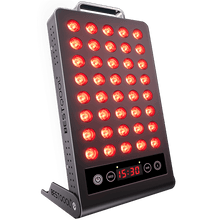
Routine maintenance matters because residue and clogged vents can reduce light intensity and raise overheating risk. For a panel or handheld, power it off, unplug it, let it cool, and wipe the exterior with a soft, dry microfiber cloth after use. If the manufacturer allows it, a lightly dampened cloth or approved alcohol wipe can be used on nonporous exterior surfaces, but liquid should never be sprayed directly onto the unit. For masks or other skin-contact devices, cleaning after every session is the safer standard because sweat, oil, and skin care residue build up quickly.
This is also where many people get too aggressive. Scrubbing hard, soaking seams, or using bleach and harsh cleaners solves the wrong problem. The goal is not to sterilize a gym tool after every use. The goal is to remove sweat film and debris without pushing moisture deeper into the electronics.
How to store the device so moisture does not linger
Cool, dry storage away from humidity and direct sunlight is the baseline. In a home gym, that usually means not leaving the device on the floor, not storing it beside a shower-adjacent bathroom door, and not sealing it into a case while it is still warm. Warm electronics trapped in an enclosed bag can hold moisture longer than many people expect.
A useful comparison comes from overnight drying habits used to protect small electronics. While a large red light panel does not go into a hearing-aid drying jar, the principle still applies: give the device a dry resting place and enough time to release moisture fully before the next use. For smaller red light devices, a dry cabinet or storage bin with fresh desiccant packs can be a reasonable option, as long as the packs never touch hot surfaces and the bin is used only after the device is fully powered down and cooled.
If your gym is in a basement or garage, the room itself may be the real problem. Air leaks move much of the water vapor through a home, so moisture control is not just about the device. Better ventilation, sealing obvious leaks, and keeping the room drier will protect both the equipment and the space around it.
When accessories help and when they do not
Covers, pouches, and cases help most during storage, not during sweaty use. A cover can keep dust off a panel between sessions, but a cover placed on a device that is still warm or damp may trap moisture. In the same way, a case is helpful for a handheld that moves between rooms, but it is not a substitute for drying the unit first.
Water-resistant build quality can be worth paying for if your gym stays humid year-round, but water-resistant should never be read as sweat-proof or waterproof unless the manufacturer clearly says so. Red light devices are still home electronics with ports, seams, power supplies, and cooling needs. If a maker is vague, the safest assumption is dry indoor use.
Early signs that moisture is already causing trouble
Inconsistent moisture-related performance problems are often an early warning sign. On a red light device, that may look like flickering sections, unusual warmth, charging irregularities, fan noise, foggy LED covers, or a faint burnt or metallic smell. If that starts happening, stop using the unit until it has fully dried and has been checked under the manufacturer’s support guidance.
A useful checkpoint is simple: if you would hesitate to plug in a laptop in the same condition and location, do not run your red light device there either. That mental test prevents a lot of avoidable damage.
A practical routine that actually holds up
The routine that works best in real homes is not complicated. Finish the workout, towel off, and give the room a few minutes to settle. Use the light at the distance and session length your device recommends, then power it down, let it cool, and wipe it clean before storing it in a dry spot with airflow. That small sequence protects both the hardware and the consistency of the dose you are trying to get.
A red light therapy device does not need perfect conditions, but it does need respect for sweat, humidity, and heat. Protect the device the same way you protect your recovery routine: keep it clean, keep it dry, and keep it out of the splash zone.


 Small
Small

 Moderate

 Moderate

 Moderate

 Full
Full

